
Edmond Previous Residents by Era
An address history is best traced through dated sources, not through a single result list. Oklahoma County assessment and deed records establish the parcel and ownership trail. Directories, census records, newspapers, cemetery records, and probate files add people who may have lived at the address without holding title. The source date is essential. A deed records a transfer, an assessment shows an owner and situs or mailing field, and a directory or census offers only a snapshot of a household. Keep those roles separate as the trail moves backward.
| Edmond source | Period or depth | Where held | What it can show |
|---|---|---|---|
| County Clerk land records | First federal patents, territorial records, and present records; web start not stated | OKCC.ONLINE and County Clerk | Grantor, grantee, recording date, instrument, and document type |
| Assessor and City GIS | Contemporary parcel detail with sales/value history | County and City portals | Situs, owner field, parcel PIN, lot, block, and plat |
| Verified Edmond directories | 1958 and 1963; additional Museum years not posted | OHS and Edmond History Museum | Historical household and address clues |
| Federal and local census material | Released schedules through 1950; local indexes vary | NARA, OHS, UCO channels | Household relationships at a dated census |
| Edmond Sun and Sanborn maps | Sun from 1889; maps 1894 to 1914 | Museum, OHS, Library of Congress | Notices and built street or lot context |
Start at the current parcel when the address is known. For a very early tract, begin with the legal description or addition because a current house number may not reach the older record.
Start Edmond Previous Residents with a Parcel
Use the Oklahoma County Assessor Public Access System to search a physical address, owner name, real account number, or personal account number. The physical-address search accepts directions and partial street text with a wildcard. Record the parcel PIN, real account, physical location, legal parcel reference, and every lot, block, or plat detail. Then compare the result with the Edmond address locator and GIS. The City layer can separate a postal Edmond address from an address actually inside city limits, while the Assessor's owner mailing address may be elsewhere.
This first pass does not prove occupancy. It gives the stable identifiers needed to follow an earlier household without confusing a mailing address, a situs address, and a legal description.
Edmond Previous Residents in the Deed Index
The Oklahoma County Clerk's OKCC.ONLINE portal is the recorded-land index for the backward title trail. In its Registrar of Deeds search, use Address first, then name, document type, book and page, instrument number or PID when needed. A result row can show the instrument number, grantor, grantee, recording date, and document type. The Clerk says its written ownership record reaches from federal patents and territorial days to the present, but the exact beginning of public web coverage is not stated. Older or sensitive material may require the counter or a formal request.
The OKCC.ONLINE land-record landing page shows the Registrar of Deeds search environment used for this address history.
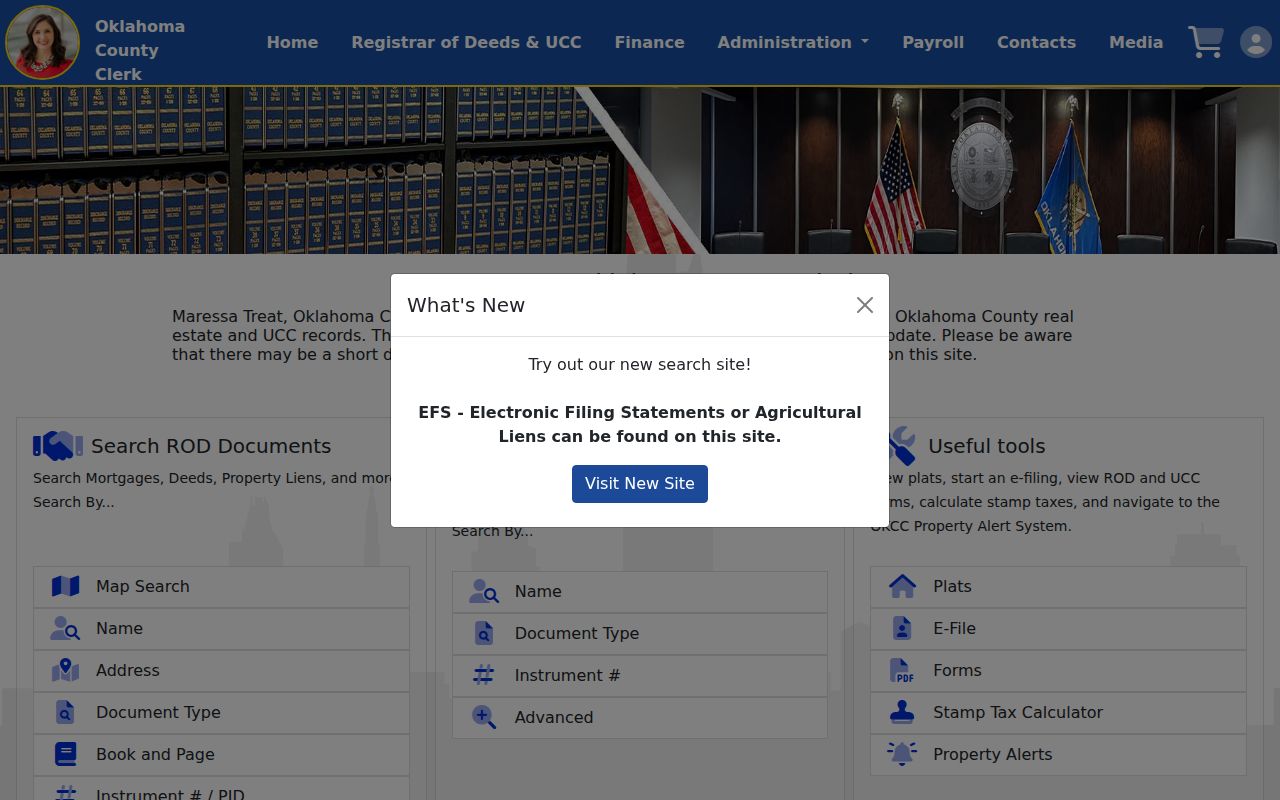
Record the document type as well as the names. A mortgage, lien, release, plat, or deed belongs to a different part of the property story and may not identify who lived at the address.
Trace Edmond Past Owners Through Deeds
Deed chains are built backward, one indexed transfer at a time. Start with the current owner's recorded purchase, locate the seller, then search that seller's earlier acquisition. Search names in the order and spelling the index uses, including variants. Do not assume a transfer is an arms-length sale, and do not treat a deed chain as a census of occupants. A document image, where available, can supply the legal description, prior-instrument reference, easements, and release detail that make a name trail more reliable.
- Capture the modern situs address, parcel PIN, legal description, and subdivision, lot, and block from the Assessor and City GIS.
- In OKCC.ONLINE, choose ROD and search the address. If it fails, use the current owner, legal description, PID, or book and page.
- For each relevant row, record the grantor, grantee, instrument number, recording date, and document type before opening or ordering the image.
- Search the earliest current grantee as a grantor to locate that person's prior transfer, then repeat the sequence backward.
- Compare the sequence with tax, plat, Sanborn, and directory evidence. Ask the County Clerk for older books or images when the public web does not supply the needed record.
- Grantor and grantee
- The grantor transfers an interest. The grantee receives it. The terms identify parties to a recorded document, not every occupant.
- Chain of title
- The documented succession of land interests, built by linking one transfer to the prior one.
- Legal description
- The lot, block, plat, section, or tract wording that identifies land more reliably than a street number when addresses change.
Edmond Previous Residents Before Modern Numbers
Early Edmond research can break if it relies only on a current street number. Broad Street became Broadway by 1890, while the 1886 survey line became 15th Street and a section line became 2nd Street. The City Street Names List preserves addition names and map codes that can bridge an old reference to a current parcel. Original Townsite and other additions may be more useful than an abbreviated address in a directory or deed. Keep each historic form in the notes before trying a modern map search.
The 1894 Edmond Sanborn map begins the known digitized run, with related 1898, 1901, 1903, 1908, and 1914 editions. These sheets can date a building footprint and show lot relationships. They do not name every household or prove that a person lived at a property.
Edmond Past Households in Directories
Ownership is only one part of an address story. Edmond's verified 1958 and 1963 directories, plus additional Museum holdings, may add a household name or a street clue between deed transfers. The local collection itself belongs on the Edmond city directory page; use it here only to connect dates in a single address trail. A same surname at a familiar address is not enough. Compare the exact street form, spouse or household clue, and an independent source before identifying who lived here before.
- Find the nearest available directory entry and copy its spelling, address, source year, and any publisher notation.
- Check the next available directory rather than assuming every year survives.
- Match the household to the closest released census and compare relationship and address evidence.
- Use the Edmond Sun, a marriage or obituary index, cemetery record, or probate file to test a move, death, or inheritance event.
Lawful use. Edmond previous-resident research is appropriate for family history, estate questions, and learning an address history. Do not use a historical trail to stalk, harass, or harm a living person; Oklahoma law prohibits stalking and related harassment.
Edmond Past Residents at the Trail's End
Obituaries, funeral material, cemetery records, and probate files can close a household trail when a person disappears from a directory or an ownership chain. OHS's obituary index covers 1972 through 2014, and its funeral-program index covers 1905 through 2020 overall. For Edmond-specific burial research, Gracelawn's City map searches by name, date of birth, or date of death. Burial and ownership records are separate City functions, so a cemetery result is evidence of interment, not title or household status.
The City of Edmond Gracelawn burial search is the official local starting point for an interment check.
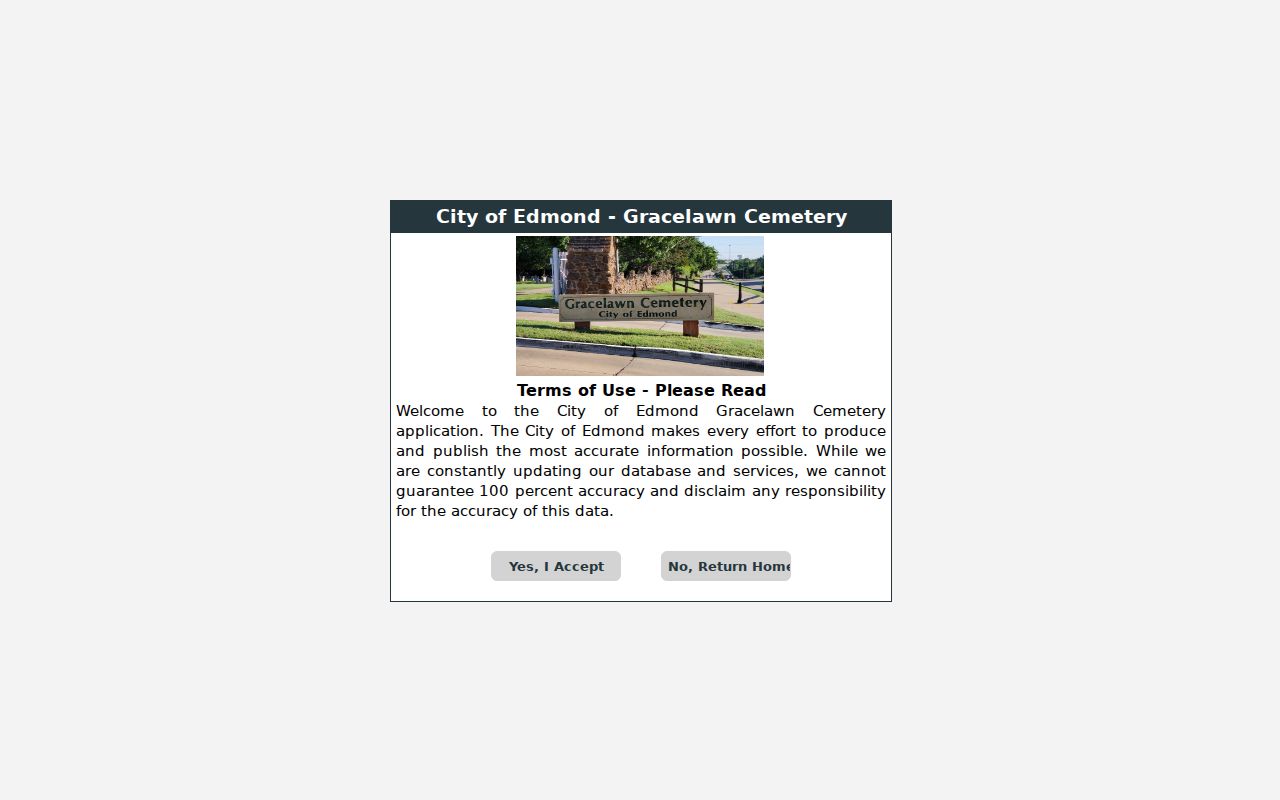
A cemetery match can narrow dates and family ties. Verify it against the underlying city record, an obituary, or a probate file before tying it to a former address.
Edmond Previous Residents Beyond the Web
The Edmond History Museum Research Library holds directories, Edmond Sun microfilm, yearbooks, cemetery records, and local vertical files. Its volunteers assist by appointment, making it the local fallback when an online index stops. The Oklahoma County Clerk also keeps records in person at 320 Robert S. Kerr Ave. in Oklahoma City, where older books, images, and copy options may be available. A written open-records request can name an address, legal description, date range, document type, and known instrument number.
The County Clerk Property Alert can also send free text, email, or automated-phone notice for new recordings under a registered name or property.
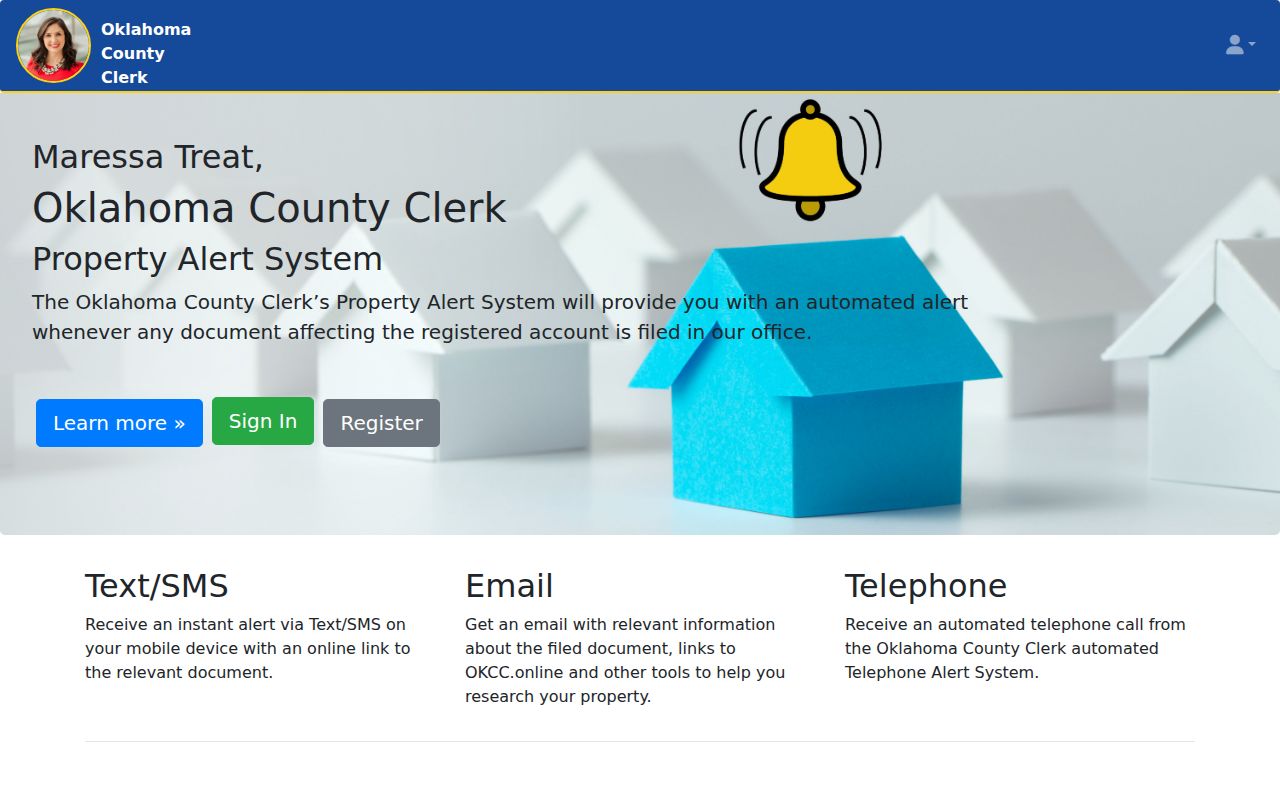
The alert is a current-recording safeguard, not a history search and not a filing block. Common names can cause false positives, so inspect any alert in the deed index.
Edmond Past Residents at Local Shelves
The Edmond History Museum Research Library keeps the local materials that link parcel history to community history. Its 5,000-plus books and periodicals, directories, yearbooks, Edmond Sun microfilm, family histories, and cemetery records make it a strong independent check after the county records. Call (405) 340-0078 before visiting, especially when a request depends on a particular directory year or microfilm run.
Use the Museum's evidence with recorded land documents and dated public records. That keeps a compelling family or address story from outrunning the sources that support it.
Edmond Address History When the Web Stops
A missing online result does not end an Edmond address history. The Oklahoma County Clerk's office at 320 Robert S. Kerr Ave. in Oklahoma City is the recorder and Registrar of Deeds custodian for deeds, mortgages, liens, plats, mineral leases, and related instruments. It can provide inspection and copy options when an image is not online, an older book reference needs help, or a restricted document type is not published on the portal. A focused written request should name the street address and legal description, date range, document type, and any instrument or book-and-page number already found.
The County Clerk's schedule distinguishes no-fee redacted unofficial land images from charged official unredacted electronic images. The County's open-records route also allows an agency to estimate a cost in advance when a request is large. Keep an index result, a source date, and the exact record identifier with every request. That reduces the chance that an address-history search reaches the wrong same-name person or a different tract.